
Midwest Prairie Medicine
A Large-Scale Botanical Photography and Immersive Audio Installation
NEW WORK
About the Work
-
Midwest Prairie Medicine is a photographic and healing arts documentation project focused on medicinal plants native to the Iowa and Nebraska tall grass prairie. The project is rooted in environmental urgency; less than one percent of Iowa's original tall grass prairie remains. The plants documented here — species that sustained human and animal life on this land for centuries — are increasingly rare, poorly understood by the public, and largely absent from mainstream visual culture.
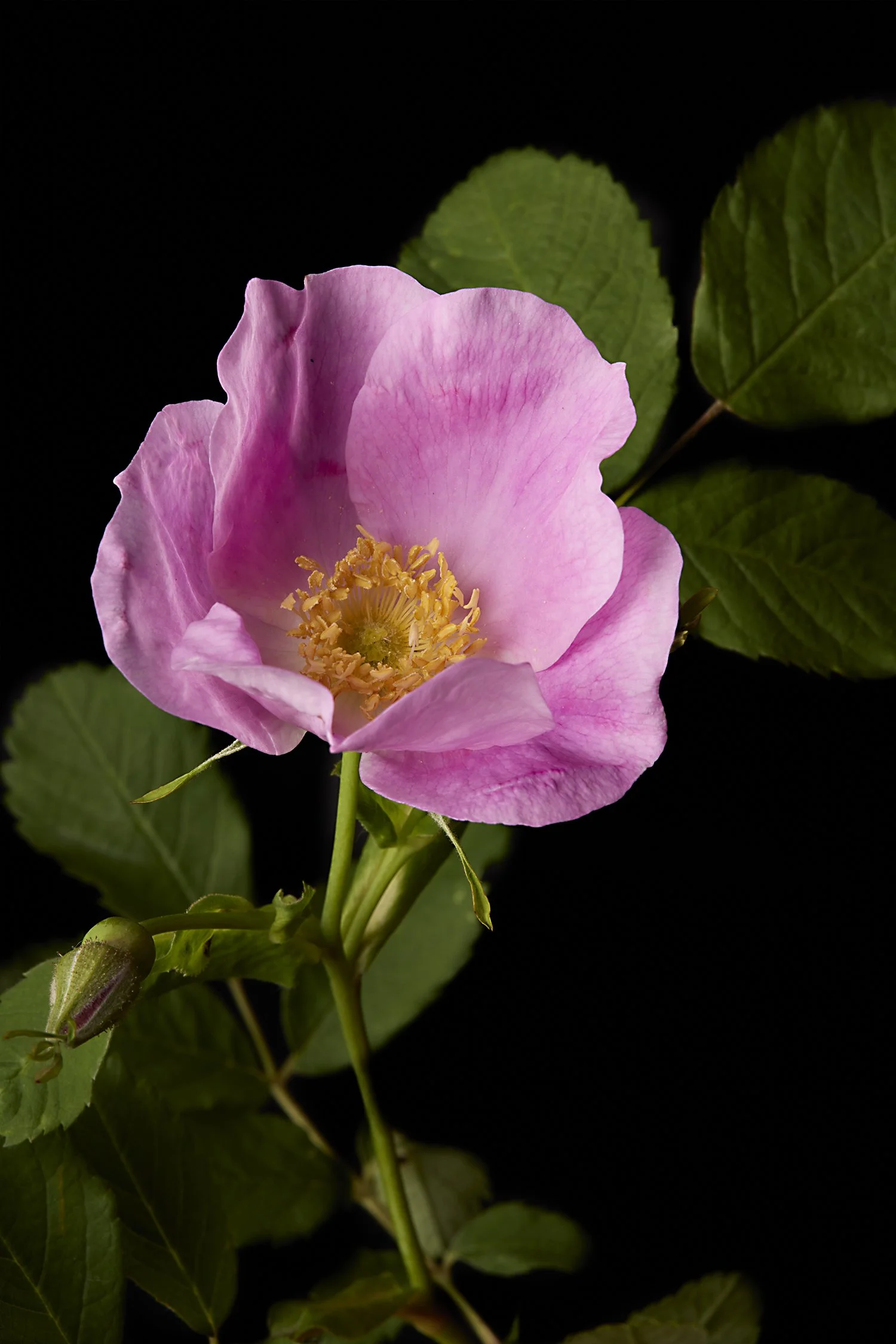
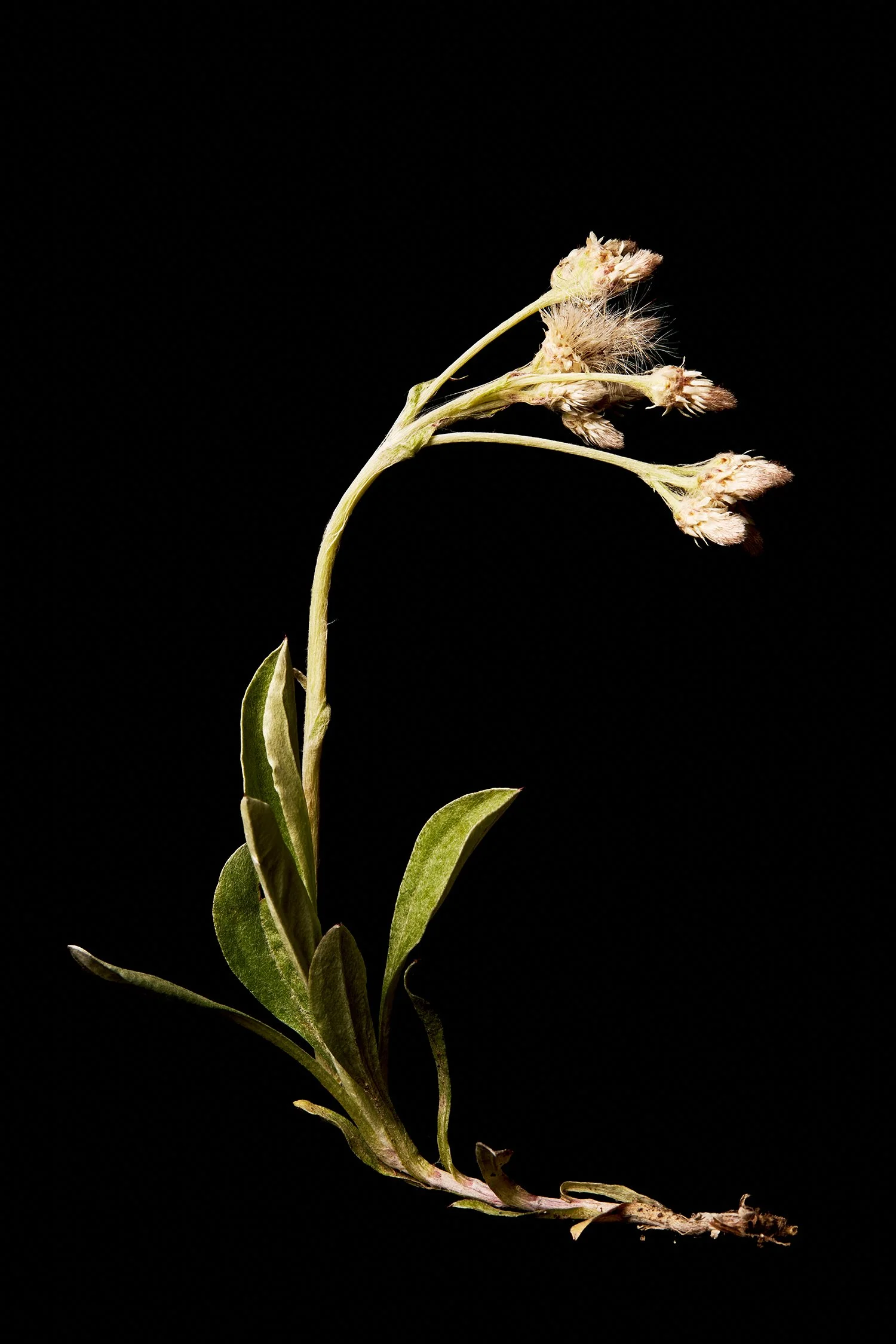
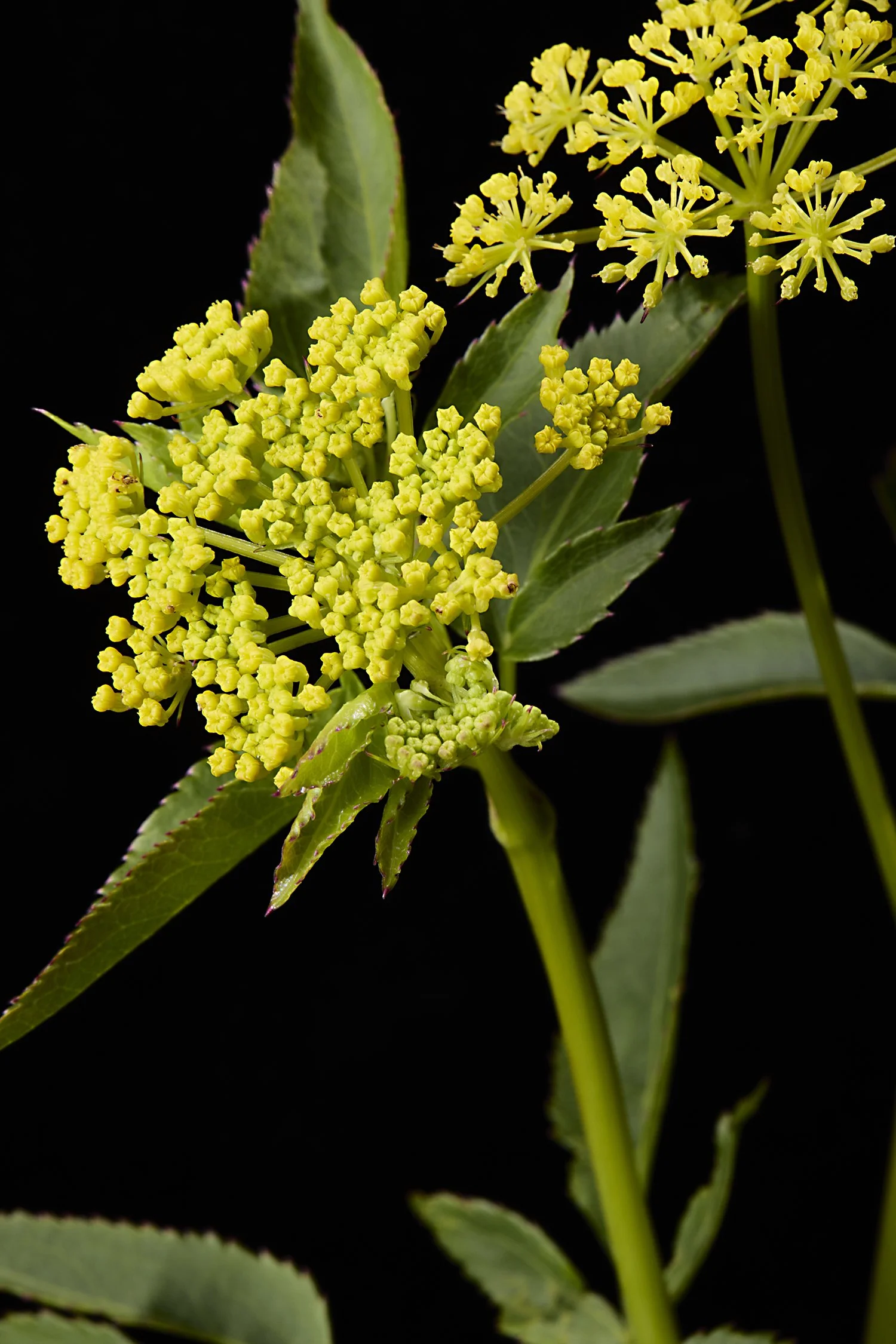
Each plant is photographed in closeup detail against a black background, inviting the viewer to look closely for details. The result is a personalized portrait of each individual plant..
-
This work began as a relationship to the land in which my roots come from.
For twenty years I have worked as a fashion and portrait photographer — shooting people in San Francisco, New York, and internationally, building a career around the human face and form. I enjoy it and I am good at it. I understand light, presence, the moment just before someone reveals something vulnerable and honest about themselves. While that is still very alive for me, I feel the slow turning toward a subject that begs to be seen in my homelands.
Post pandemic, I came back to the Midwest, to the ancestral lands my family is rooted in. Leading me even closer to nature. I wanted to share this deep healing the land gave me. Through a creative spark, I concepted a photography audio meditation experience that could be used anywhere as an oracle deck, or utilized large scale in clinical settings. I followed that inspiration to the prairie and began turning my camera on medicinal plants. It was not a pivot. It was a return. The same attention I have trained for twenty years on human beings, I am able to give to the organisms that have been here long before any of us: the goldenrod, the Eastern red cedar, the wild bergamot growing at the edge of the field. I want to see them the way I have learned to see people — fully, with my attention held long enough for something authentic to come through.
I live and farm now in northeastern Iowa in a landscape shaped by tall grass prairie that has been nearly erased by big ag fields. Iowa is currently #2 in the nation for cancer and the midwest is suffering from chronic rheumatism and other nervous system disorders due to the glyphosate used on the fields. The plants that remain — the ones that grew here long before humans, that fed and healed and oriented generations of people to this land — are still here, persisting. Most people pass them without recognition. I have became obsessed with understanding their medicine.
Midwest Prairie Medicine grew from that obsession: working intimately with these plants, photographing them at large scale, and researching their healing traditions. The project asks what it would mean to offer these plants and their medicine back to people — not as specimens, not as nostalgia, but as living stories. The medicine is not only botanical. It is perceptual. It is energetic. To slow down and truly see a plant is already a healing act.
-
Each botanical print in the Midwest Prairie Medicine series is built from four integrated elements:
Botanical Photography Each plant is photographed against a pure black ground using studio lighting and professional photography equipment, creating images of extraordinary detail and quiet intensity. Printed at institutional scale — up to several feet across — these are not illustrations. They are portraits. Each one is designed to stop a viewer in their tracks and hold their attention long enough for something to shift.
Plant Medicine Text Each print is paired with written content in four sections: The Plant (ecological and cultural context), Plant Medicine (traditional and historical healing uses), Simple Practice (an accessible, embodied exercise the viewer can do wherever they are), and Reflection (a contemplative invitation for personal inquiry).
Bioelectric Sound: The Voice of the Plant At the sonic foundation of each piece is the living voice of the plant itself. Using a device called PlantChoir — which reads the subtle fluctuations in electrical resistance moving across a plant's surface and translates those signals into audible tones — each species generates its own continuous sonic presence. Goldenrod sounds different from Eastern Red Cedar. White Pine carries a different rhythm than Fern. This technology makes audible what has always been occurring just below the threshold of human perception: the living intelligence of the plant, expressed as sound.
This bioelectric audio forms the ambient ground of each plant's audio experience — the actual voice of the organism itself.
Guided Audio Meditations Layered over the bioelectric sound is a 2–4 minute guided audio meditation composed specifically for each plant species. Drawing from the ethnobotanical heritage of the Iowa prairie, each meditation illuminates the healing traditions, ecological identity, and contemplative qualities long associated with that plant. They are written as intimate encounters — an invitation to breathe with something ancient, to remember the larger living system the body belongs to.
Conceptually, audio meditations are accessed via a headset when checking in at the clinic or via QR code linked to each oracle card, making the full layered experience available in any setting.
Examples of the Work
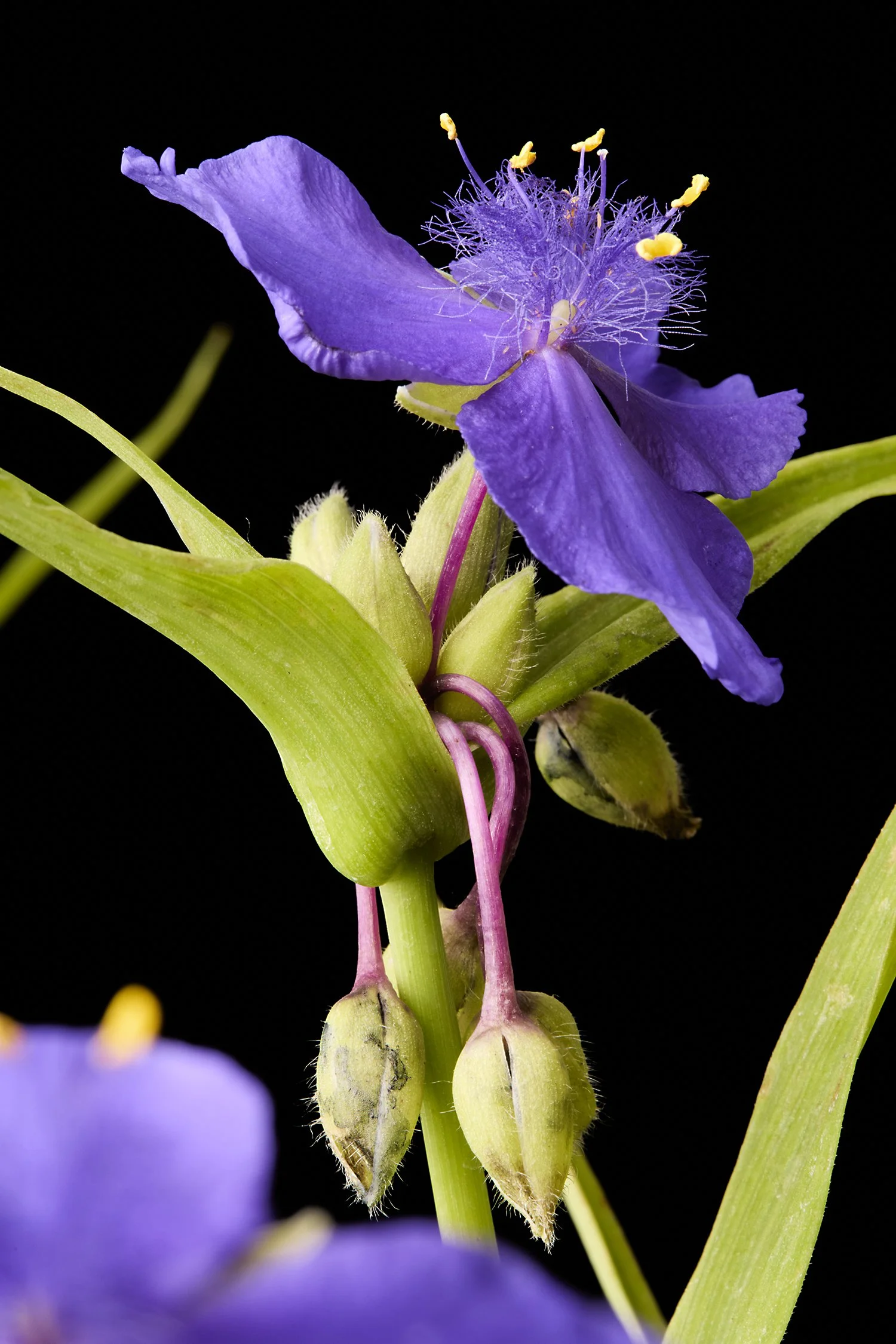
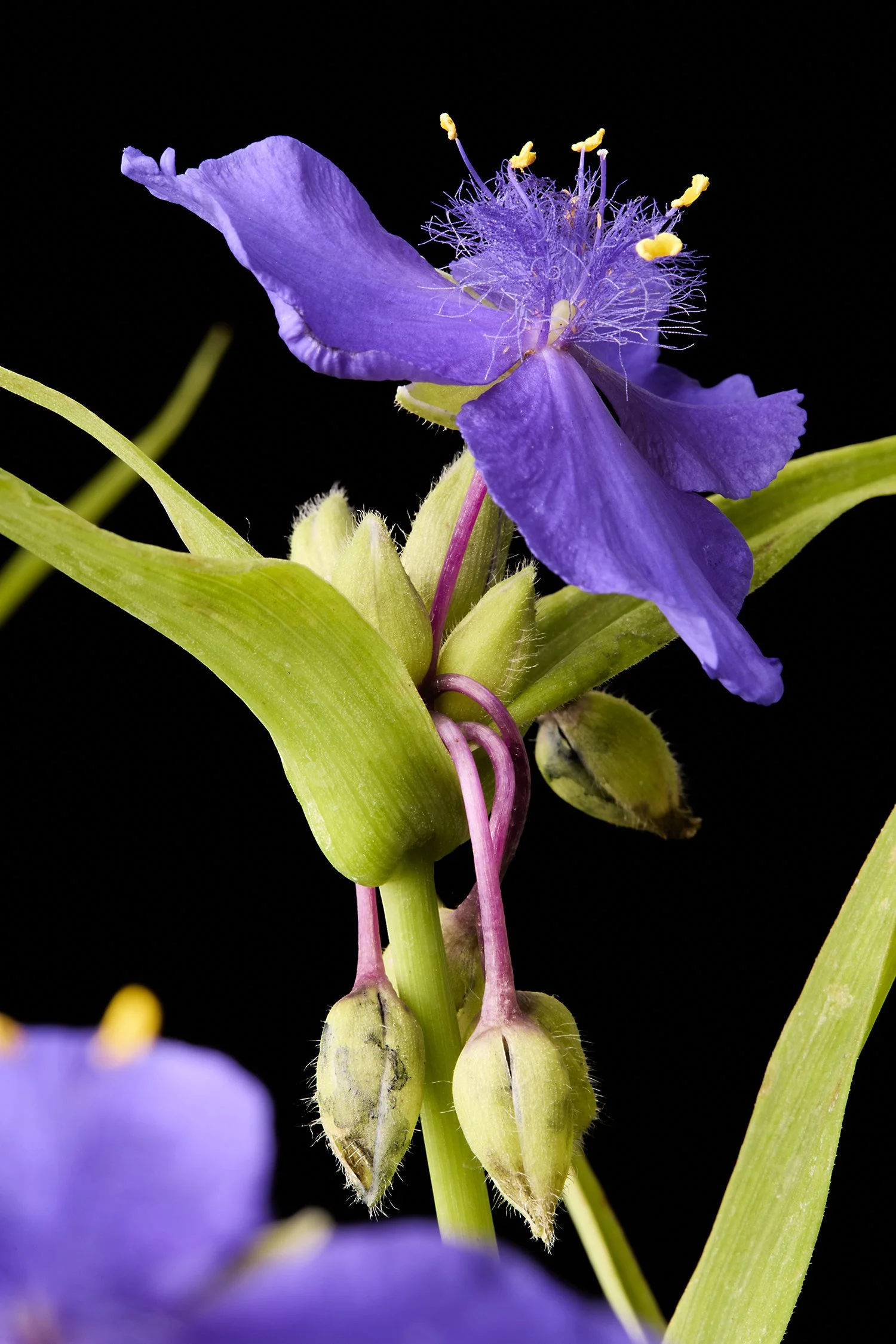
Spiderwort
Tradescantia • Presence
-
Spiderwort blooms violet-blue in the morning and folds back into itself by afternoon — each flower lasting only hours before it is gone. Native to the tallgrass prairie, it grows in loose colonies along meadow edges and open woodlands, its long arching leaves radiating outward like open hands. Spiderwort was once believed to cure spider bites, hence the name. The wort in its name marks it as a healer in the Old English tradition. A plant people turned to.
-
Cherokee healers brewed the leaves into tea for digestive and kidney support, and worked the root into remedies. The cooling, mucilaginous sap of a torn leaf was applied directly to insect bites and inflamed skin. Some plants have been found to change flower color when in the presence of nuclear or radioactive radiation making it an early indicator and a living witness to harmful chemicals that cannot be seen.
-
Sit where you can feel the light. Close your eyes and take one full breath in. As you exhale, imagine letting your mind, body, and spirit open. Allow yourself to soften into the present moment. Nothing to perform. No where to go or become. Just a sacred pause of pure presence.
Breathe in again.
Release, and let yourself fold gently closed. Feel a sense of wholeness. Completeness.
-
You are being asked to stop saving yourself for later. The medicine here is not endurance — it is complete presence for the time that is given. Open fully, now, to this conversation, this grief, this joy, this ordinary moment. Spiderwort does not ration its blooming. Neither should you. What you offer completely, even briefly, is not lost. It matters. It is enough.
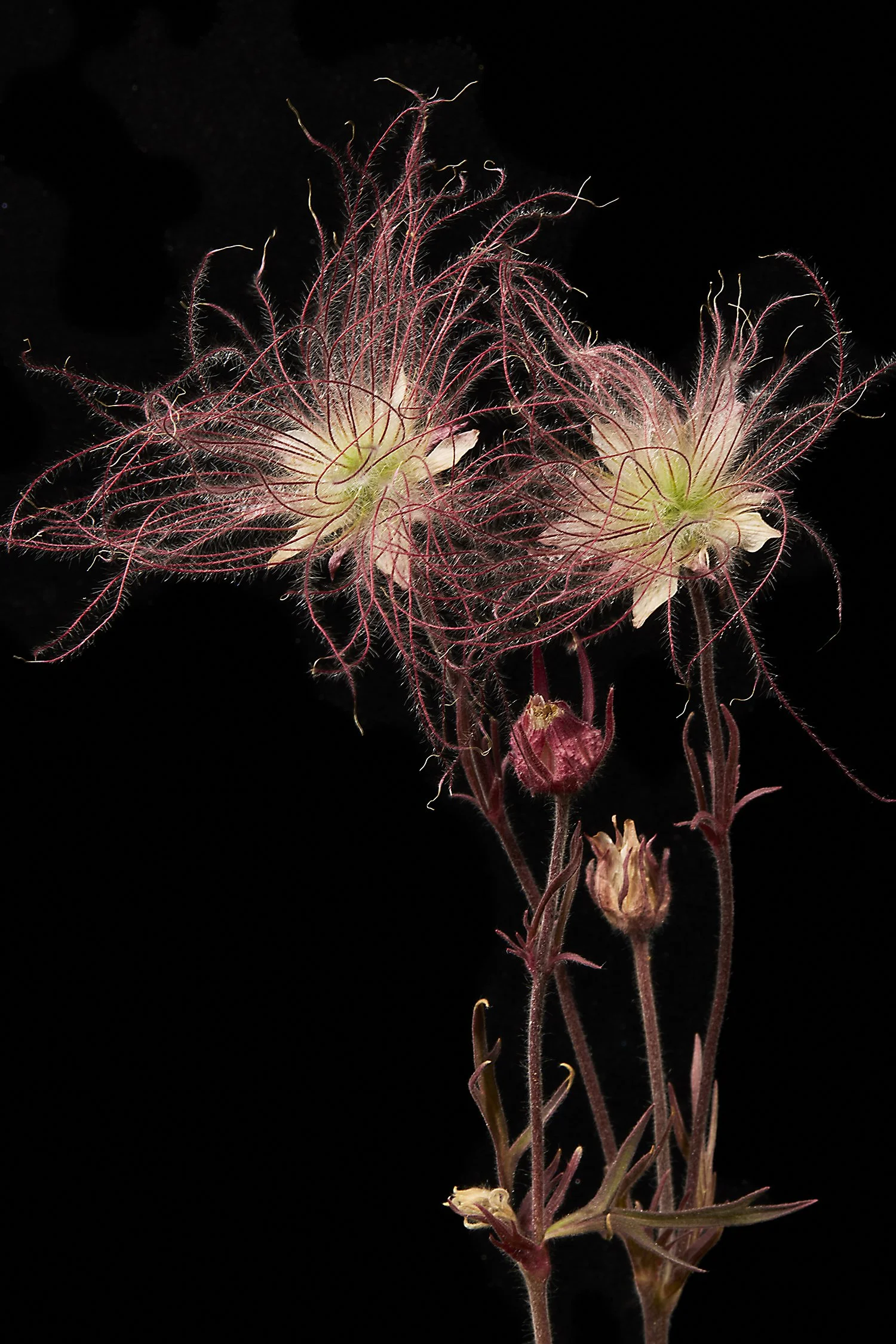
Prairie Smoke
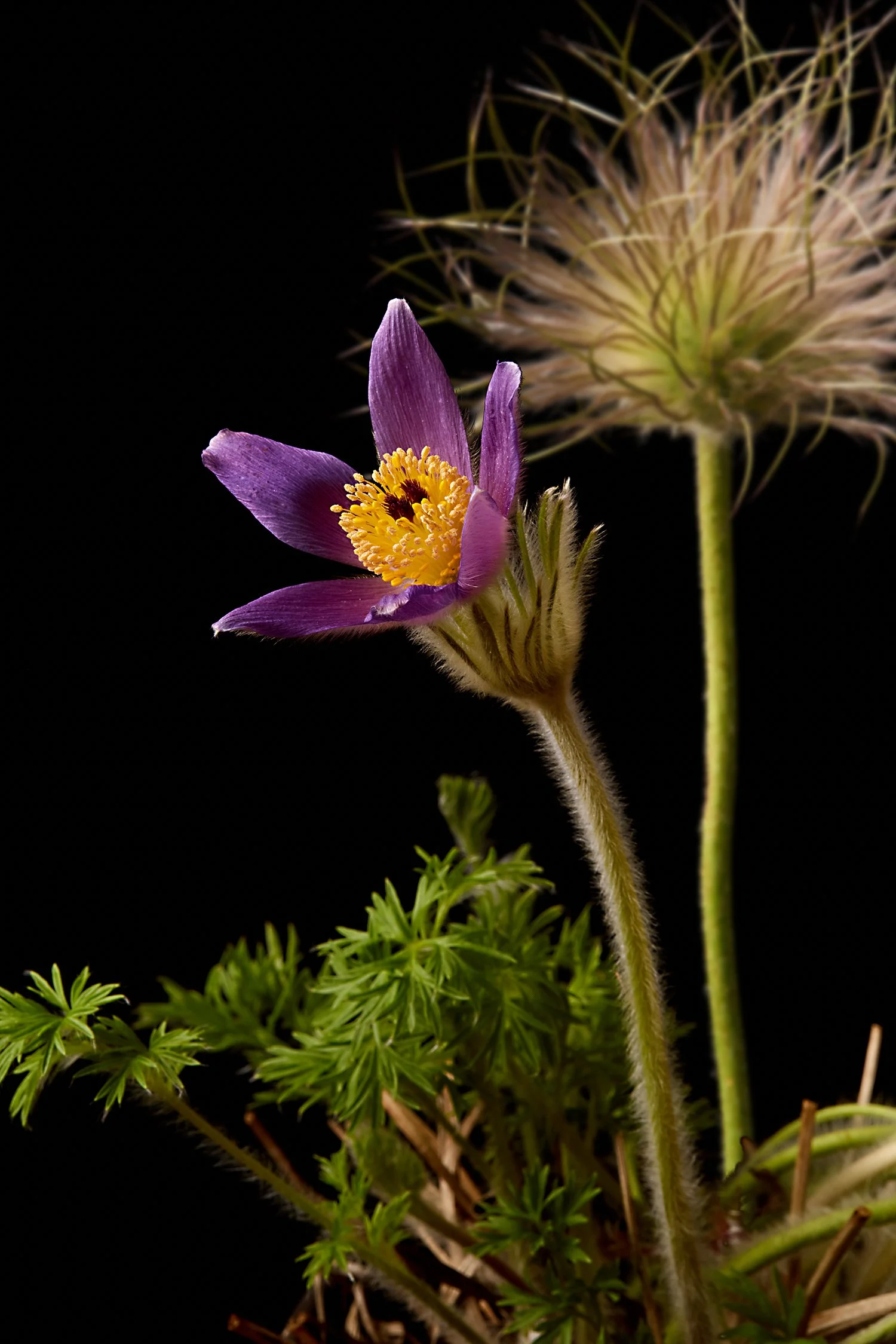
Geum triflorum • Transformation
-
Prairie smoke is one of the first plants to rise on the spring prairie — low to the ground, nodding rose-pink flowers that never fully open, as if holding a little something just for themselves. What follows is its true offering: long feathery plumes that catch the light and drift like wisps of smoke across the grassland. It is more spectacular in seed than in flower. The transformation is the beauty.
-
The root of prairie smoke is a powerful astringent, officially listed in the US Pharmacopoeia from 1820 to 1882. Blackfoot healers boiled the plant to treat inflamed eyes and used the root as a salve for sores, rashes, and wounds. Ojibwe healers brewed it for coughs and chest complaints. Root tea was used across many traditions for sore throats, digestive cramping, and fever — a plant that softens, loosening what has become congested.
-
Place one hand on your heart and one hand on your belly. Take a slow breath in, and feel into the body. Where are you holding on? Where do you feel tension? Where can you soften? Don't rush to open. Just notice. Prairie smoke blooms without ever fully opening. Let yourself be in that place — between bud and bloom, between question and answer. The in-between space is where transformation happens. Something is forming. It will be revealed at a later time.
-
You are in the dispersal. What feels like dissolution is actually release — the moment the plant lets go of what it has been holding so it can become something that travels. Stop trying to hold on to the known. Your next chapter needs you to trust the wind of change. Let go of what has already completed itself. You are not fading. You are seeding.
Cream Wild Indigo
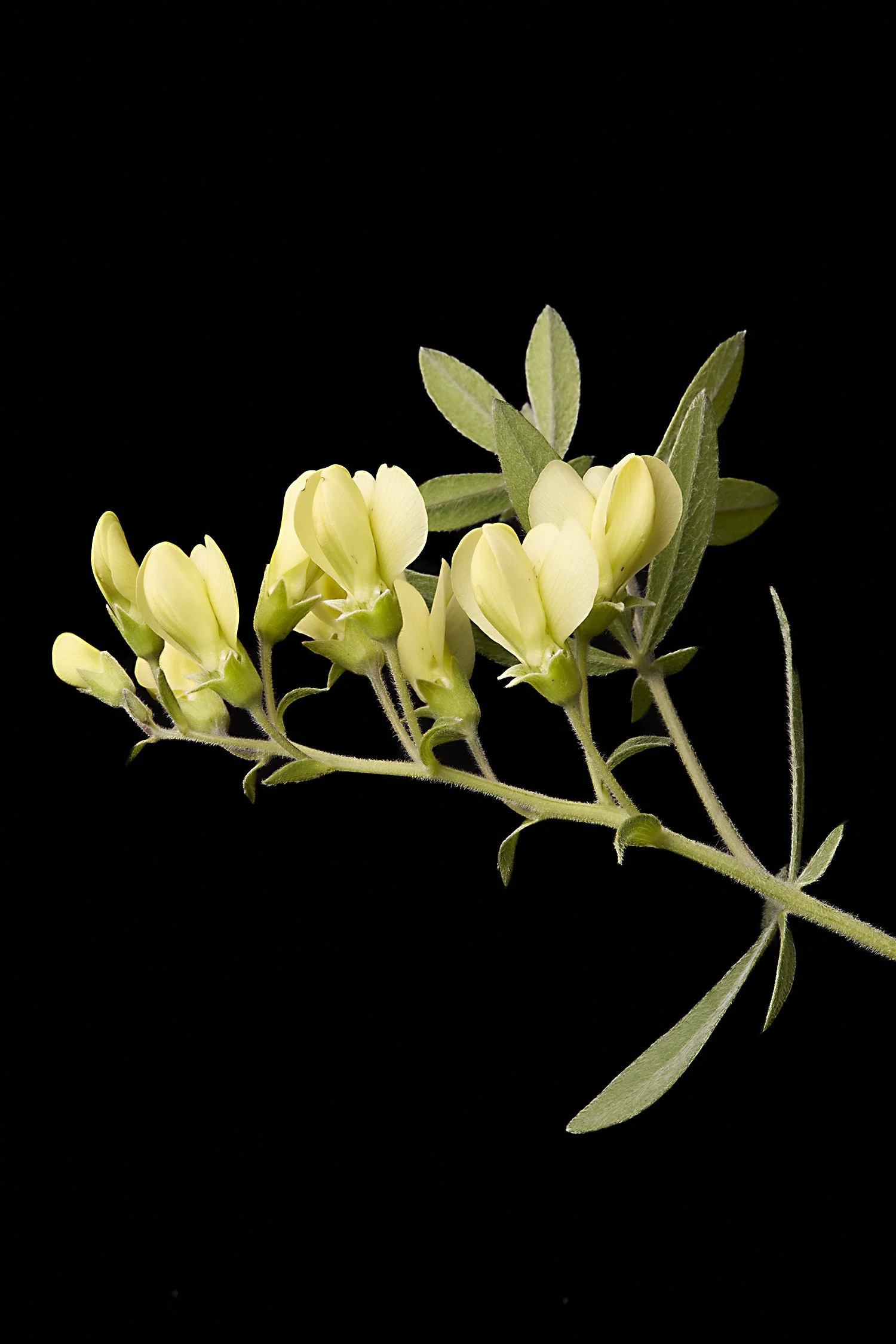
Baptisia bracteata • Devotion
-
Cream wild indigo blooms early and low — its long flower racemes cascading toward the ground under their own weight, pale cream blossoms drooping open for the first bumblebees of spring. By autumn the flowers are gone, the leaves have blackened, and what remains are plump, dark seed pods that rattle when shaken. Children on the prairie picked them up and shook them in imitation of their elders — practicing ceremony before they had the words for it, already learning that something sacred lives in the rhythm of devotion. The root stays in the earth for decades. Everything else is given to the wind.
-
Pawnee healers ground the seeds with buffalo fat into a salve for colic and brewed the root into tea for typhoid and scarlet fever. The leaves, astringent and clarifying, were applied directly to wounds. Across the Baptisia family the root is understood as deep immune medicine. It strengthens the body's innate capacity to recognize what it is to protect itself and to respond with clarity when something foreign enters. It is medicine for the body's knowing.
-
Imagine your breath as the rattle of your life force energy. Rhythmically entering and leaving the body. Each breath, seeds shaking in a pod, waiting to ceremoniously spread to the earth. Close your eyes. Breathe in slowly, and as you exhale, let your breath move in a simple rhythm — a small shake, a quiet rattle. Not performing anything. Let your body remember that devotion is not a destination. It is a point of focus that you return to, again and again, the way a child does — with a freshness and curious quality, without needing to understand it fully to mean it completely.
-
Somewhere inside already has deep knowing and trust. Before you had theology, before you had the doubt, before you had the reasons not to — there was a child in you who picked up the rattling thing and shook it, who circled the fire in imitation, who whispered to the sky without being taught. This flower is an invitation back to that. Not to what you believe or don't believe, but to the motion of devotion itself — the returning, the offering, the consistency of showing up before you feel ready. The sacred does not require your certainty. It only asks for your presence.
Continuing the Work
Installation Context: Healthcare and Public Spaces
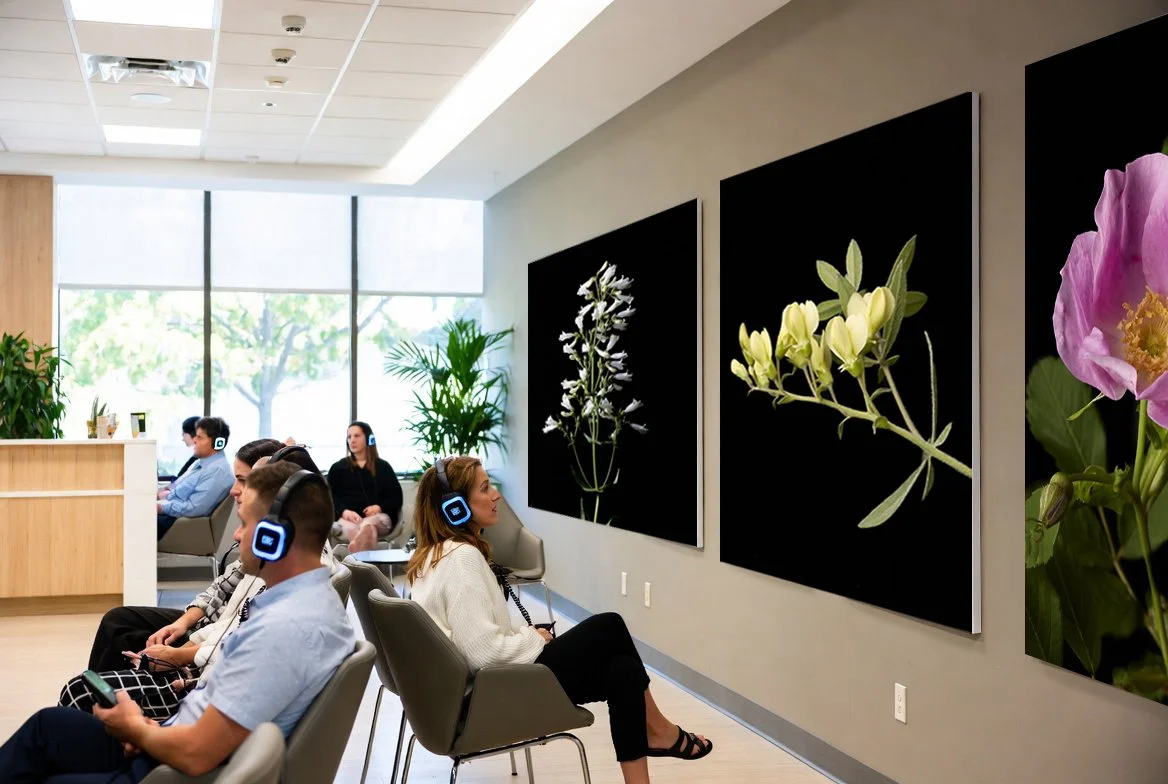
Midwest Prairie Medicine is designed for installation in healthcare facilities, hospitals, and public spaces where people carry the weight of uncertainty and would benefit most from a moment of genuine contact with the living world.
In clinical settings, the installation includes a custom-coded audio delivery system: patients receive headsets at check-in, each paired to the botanical prints displayed in the waiting area. When it is their turn to be seen, staff deliver their name directly through the headset — a quiet, personal notification that momentarily pauses the meditation before allowing it to resume — replacing overhead paging with something far more consonant with healing.
The result is a waiting environment designed not to manage time, but to transform it.
The Project Forms
The completed Midwest Prairie Medicine series will be realized in three forms:
Large-scale institutional prints for permanent collection in healthcare facilities, hospitals, and public spaces, priced for major institutional acquisition
A Prairie Medicine Oracle Deck — a card-based edition of the full series for individual use, each card bearing the botanical portrait, plant medicine text, and QR-linked audio meditation
Public programming — hands-on workshops at Sunset Harvest Farm combining photography and prairie plant knowledge, and an exhibition at Guttenberg Gallery & Creativity Center